


travel
16 / 02 / 2026
In Brussels, Badi stands out as a restaurant where design and produce share equal billing.
What began in January 2023 as a bar-restaurant devoted to cider and natural sparkling wines is now marking its third anniversary with a sharper, more ambitious direction: a fully fledged standalone restaurant. The menu is structured yet uncomplicated, seasonal, shareable, and paired with a carefully curated drinks list.
Founded by Maxime Bourdigal and Victoria Merret, whose experience spans Bertrand Larcher between Paris and Japan, as well as Brussels spots such as Ötap, Badi has evolved organically. A key turning point came when Maxime stepped into the kitchen and began developing the menu alongside Paul-Antoine Bertin. The cooking gained depth, the plates became more refined, and the restaurant’s gastronomic identity crystallised around one clear principle: everything starts with the product.
That level of rigour begins at the source. Badi prioritises natural, local and seasonal ingredients, working closely with dedicated artisans and producers, from sourdough bread and responsibly grown vegetables to farmhouse cheeses, seafood and carefully selected meat. Each dish reflects that considered approach, where simplicity is deliberate rather than incidental.
The same philosophy runs through the drinks list. Cider remains the backbone of the project, approached with the same attention and storytelling usually reserved for wine, a selection that feels particularly distinctive in Belgium. Alongside it, the list expands into sought-after natural wines, champagnes, beers and non-alcoholic options, creating a coherent offering designed to complement the experience at the table.
At Badi, this respect for craft extends beyond the plate. The interior, developed in collaboration with architect Nelly Smets, was recognised in 2023 by Commerce Design Brussels, receiving both the Jury Prize and the Public Prize. The design speaks in an honest, tactile language, anchored by a central travertine counter crafted by Filiep Dascotte, both a functional centrepiece and a symbolic one. Built around this element, the layout encourages interaction and conviviality, clearly influenced by the Japanese culture that shaped the founders’ journey.
Belgian design pieces, including Barbier Bouvet lamps, sit alongside FRAMA chairs, reinforcing the aesthetic consistency of a space where every detail is intentional. Here, gastronomy and architecture come together as a single, integrated experience, one that celebrates raw materials, on the plate and in the room, with equal precision and sensitivity.
Founded by Maxime Bourdigal and Victoria Merret, whose experience spans Bertrand Larcher between Paris and Japan, as well as Brussels spots such as Ötap, Badi has evolved organically. A key turning point came when Maxime stepped into the kitchen and began developing the menu alongside Paul-Antoine Bertin. The cooking gained depth, the plates became more refined, and the restaurant’s gastronomic identity crystallised around one clear principle: everything starts with the product.
That level of rigour begins at the source. Badi prioritises natural, local and seasonal ingredients, working closely with dedicated artisans and producers, from sourdough bread and responsibly grown vegetables to farmhouse cheeses, seafood and carefully selected meat. Each dish reflects that considered approach, where simplicity is deliberate rather than incidental.
The same philosophy runs through the drinks list. Cider remains the backbone of the project, approached with the same attention and storytelling usually reserved for wine, a selection that feels particularly distinctive in Belgium. Alongside it, the list expands into sought-after natural wines, champagnes, beers and non-alcoholic options, creating a coherent offering designed to complement the experience at the table.
At Badi, this respect for craft extends beyond the plate. The interior, developed in collaboration with architect Nelly Smets, was recognised in 2023 by Commerce Design Brussels, receiving both the Jury Prize and the Public Prize. The design speaks in an honest, tactile language, anchored by a central travertine counter crafted by Filiep Dascotte, both a functional centrepiece and a symbolic one. Built around this element, the layout encourages interaction and conviviality, clearly influenced by the Japanese culture that shaped the founders’ journey.
Belgian design pieces, including Barbier Bouvet lamps, sit alongside FRAMA chairs, reinforcing the aesthetic consistency of a space where every detail is intentional. Here, gastronomy and architecture come together as a single, integrated experience, one that celebrates raw materials, on the plate and in the room, with equal precision and sensitivity.


Photographies: © Benjamin Baltus


Related Articles
-

The arab cry
Like the song of the aïtas crossing the vast desert, Jnane Rumi hotel takes over the much sought-after Triangle d'Or neighbourhood, where it emerges, magnificent, among century-old palm trees. -

Art Legacy Hotel
A building full of history in the centre of Lisbon, once owned by the Sagres Insurance Company and later acquired by the Azorean group Bensaude, which transformed it into its head office, de-characterising its interiors and façades in the process, is now enjoying a comeback following a seven-year restoration project by the architect team led by Luís Rebelo de Andrade. -
Monte da Bela Raposa
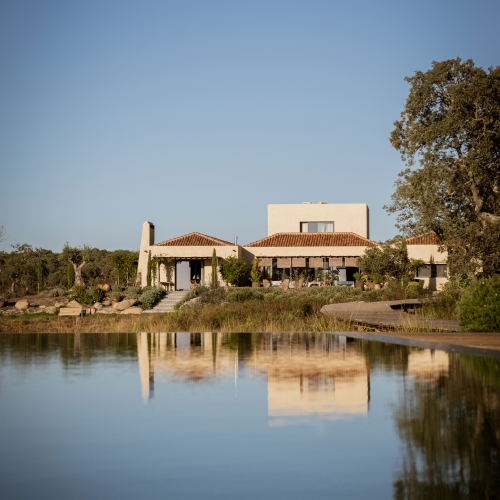
Françoise Baudry, originally from Northern Europe, was born into a family of artists, went on to study music in Vienna and specialised in painting restoration. She has lived in Belgium, Vienna, Paris and chose to settle in Portugal more than 30 years ago. Over the years, she has developed various projects related to antiques, restoration, interior decoration and landscaping.
