


Photography: Dominique Ricci and Luís Nobre Guedes
23 / 03 / 2026
Contrary to the voids of our times, Zé Maria Teixeira Duarte and Bernardo Lopes bring back high-precision carpentry, restrained and meticulous in detail.
Their hands provide us with heirloom objects, designed to accompany us over time. Having conquered the national and international luxury hotel market, JUNTO Wood Design has just opened its first showroom in Lisbon and has also announced the arrival of its online store.
Alexandra Novo: How did the alchemy of your meeting come about? What brought you together in your desire to leave a mark on the present and the future?
Junto Wood Design: The meeting happened very organically. We came from different backgrounds – one linked to design, the other to law – but we quickly realised that we shared the same concern: the desire to create meaningful objects, built to last and to be used in everyday life.
There was a shared feeling that much of what was being produced lacked purpose. JUNTO was born out of this shared vision, the desire to work with time, precision and intention, creating pieces that make sense today and will continue to do so in the future.
AN: How has this new way of living, associated with manual labour and a slower, more conscientious pace, changed your lives?
JWD: It has profoundly changed the way we look at work and, inevitably, at our own lives. We now work with more attention and presence, valuing the process just as much as the result. We realise that speeding things up makes no sense when working with living materials and objects designed to last for decades. This slower pace might be more demanding, but it also brings greater clarity, consistency and satisfaction.
Today, every decision carries weight and every little detail matters.
AN: What do you question, think and feel when faced with a block of solid wood on a day of multiple creative possibilities? What are your priorities? What woods do you prefer to work with?
JWD: The first step is always to listen to the material. We question proportions, function, resistance, aesthetics and durability.
The priority is balance: the piece has to work, age well and convey something. We prefer woods with character and historical density, such as oak, walnut or kambala – materials that embrace time as part of their journey. Each wood imposes its own limits and possibilities, and it is through this dialogue that inspiration arises.
Alexandra Novo: How did the alchemy of your meeting come about? What brought you together in your desire to leave a mark on the present and the future?
Junto Wood Design: The meeting happened very organically. We came from different backgrounds – one linked to design, the other to law – but we quickly realised that we shared the same concern: the desire to create meaningful objects, built to last and to be used in everyday life.
There was a shared feeling that much of what was being produced lacked purpose. JUNTO was born out of this shared vision, the desire to work with time, precision and intention, creating pieces that make sense today and will continue to do so in the future.
AN: How has this new way of living, associated with manual labour and a slower, more conscientious pace, changed your lives?
JWD: It has profoundly changed the way we look at work and, inevitably, at our own lives. We now work with more attention and presence, valuing the process just as much as the result. We realise that speeding things up makes no sense when working with living materials and objects designed to last for decades. This slower pace might be more demanding, but it also brings greater clarity, consistency and satisfaction.
Today, every decision carries weight and every little detail matters.
AN: What do you question, think and feel when faced with a block of solid wood on a day of multiple creative possibilities? What are your priorities? What woods do you prefer to work with?
JWD: The first step is always to listen to the material. We question proportions, function, resistance, aesthetics and durability.
The priority is balance: the piece has to work, age well and convey something. We prefer woods with character and historical density, such as oak, walnut or kambala – materials that embrace time as part of their journey. Each wood imposes its own limits and possibilities, and it is through this dialogue that inspiration arises.


AN: What considerations go into your process, from conception to the final piece? What techniques do you use and why? Is there a Portuguese identity at the root of your work?
JWD: The process begins with the design, but quickly extends to observing the wood, experimenting with joints and carefully choosing the finishes. We work with traditional carpentry techniques, not out of nostalgia, but because of their effectiveness, durability, and constructive intelligence. We apply them with a contemporary, refined, and functional eye. The Portuguese identity manifests itself in a subtle way: in the respect for the material, in the formal restraint, in the attention to detail, and in a certain functional simplicity that cuts across generations. It is not a literal language, but there is a quiet legacy in the methods, the gesture and the way the object is designed to last.
JWD: The process begins with the design, but quickly extends to observing the wood, experimenting with joints and carefully choosing the finishes. We work with traditional carpentry techniques, not out of nostalgia, but because of their effectiveness, durability, and constructive intelligence. We apply them with a contemporary, refined, and functional eye. The Portuguese identity manifests itself in a subtle way: in the respect for the material, in the formal restraint, in the attention to detail, and in a certain functional simplicity that cuts across generations. It is not a literal language, but there is a quiet legacy in the methods, the gesture and the way the object is designed to last.


Related Articles
-
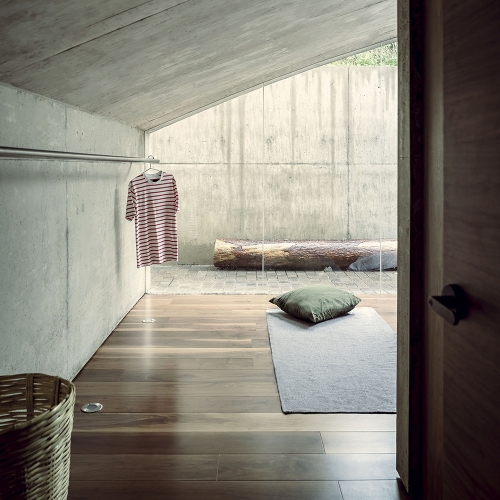
The hill over the valley
When architecture responds in an exemplary way to an idea as poetic as that of a startled child pulling up and covering themselves with their bedsheet. This “hill over the valley” embodies that feeling of protection and cosiness. -

Pleasing Trilogy
A true love story, this intimate retreat by interior designer Jeanne Feldkamp is an invitation to the contemplation of nature, where interior and exterior merge into one. -
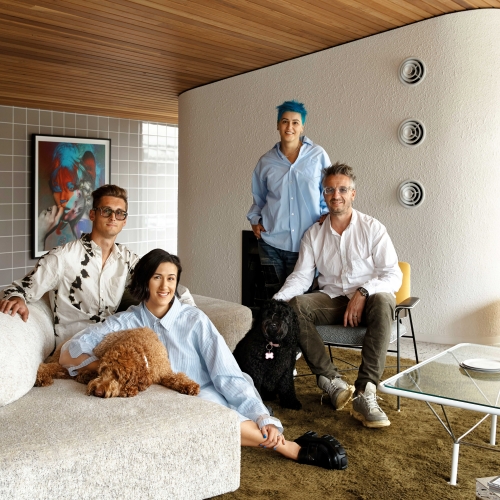
Eccentricities
A house that, in its entirety, revisits the modern style of the 1950s.
